
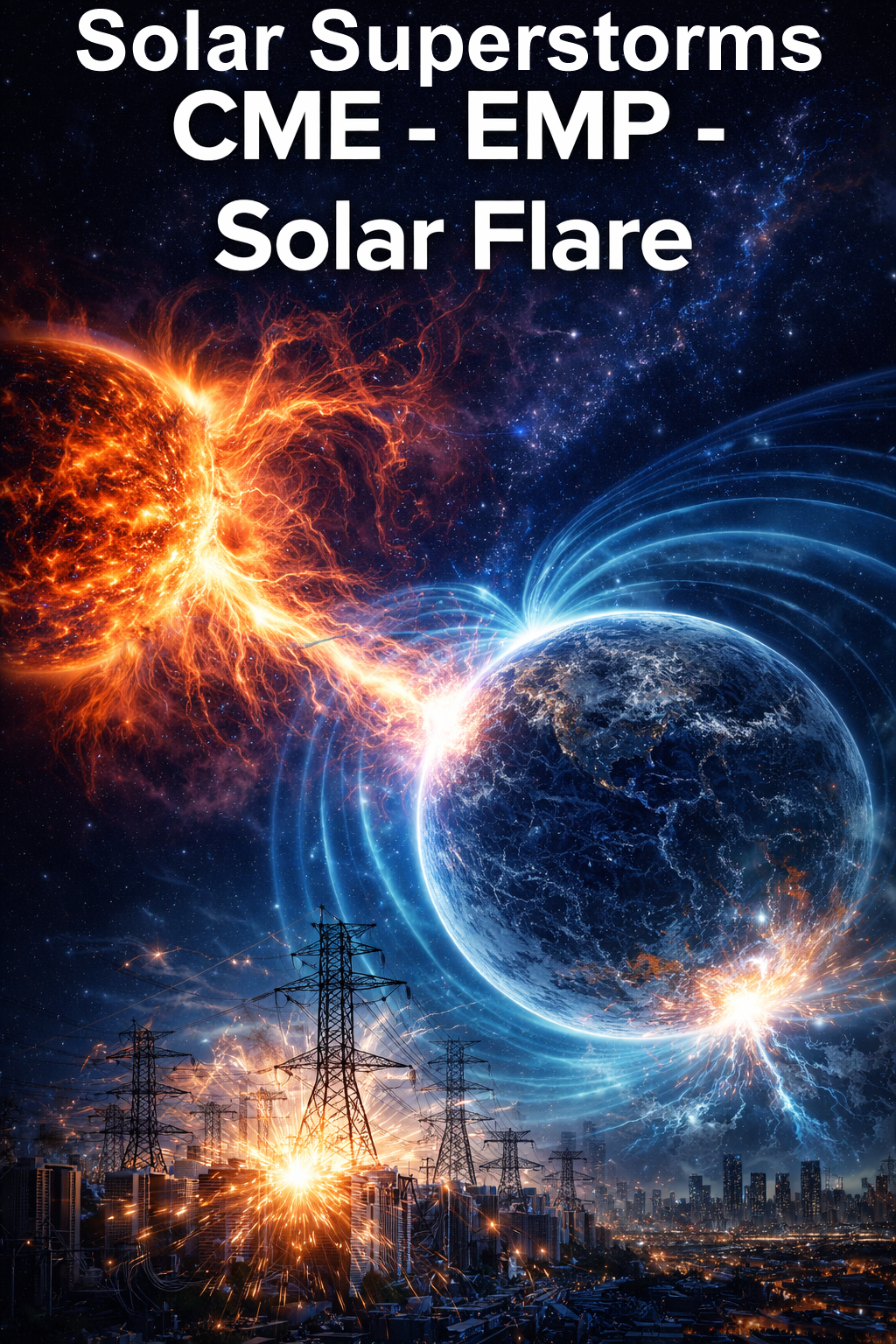
If you’ve been seeing headlines about solar storm activity lately, you’re witnessing something scientists have been tracking with increasing concern: we’re in the middle of solar maximum, and the sun is putting on quite a show.
But this isn’t just spectacular aurora displays and interesting space weather news. We’re in a window where a catastrophic solar flare event could fundamentally alter life as we know it—and most people have no idea what that actually means.
Understanding Solar Cycles and Why Timing Matters
Our sun operates on an approximately 11-year solar cycle, oscillating between quiet periods (solar minimum) and active periods (solar maximum). During solar maximum, the sun’s magnetic field becomes highly active, producing increased numbers of sunspots, solar flares, and coronal mass ejections.
Right now, in 2026, we’re still within the solar maximum window that began in 2023. This means the probability of major solar events is significantly elevated compared to other points in the cycle.
Think of it like hurricane season—except instead of tracking storms across the Atlantic, we’re watching explosive eruptions on the surface of a star 93 million miles away that could knock out civilization’s entire electrical infrastructure.
Can a Solar Flare Destroy Earth?
Let’s address the elephant in the room: Can a solar flare destroy Earth?
The short answer is no—Earth itself will be fine. The planet has weathered billions of years of solar activity and will continue to do so long after humanity is gone.
But Earth’s technological civilization? That’s a different story entirely.
A sufficiently powerful solar storm won’t crack the planet in half or boil the oceans. What it will do is far more insidious: it’ll silently destroy the delicate electronic systems that underpin every aspect of modern life, from power grids to water treatment, from food distribution to medical care.
When people ask “can a solar flare destroy earth,” what they’re really asking is: “Can a solar flare end civilization as we know it?”
And to that question, the answer is an uncomfortable yes.
What a “Solar Storm Warning Today” Really Means
You might have seen a solar storm warning today flash across your news feed or weather app. These warnings are issued when solar observatories detect coronal mass ejections heading toward Earth or when enhanced geomagnetic activity is expected.
Most of these warnings are for minor events—G1 or G2 level storms that might disrupt satellite communications or create stunning auroras at unusual latitudes. These are essentially false alarms that help train the public to ignore future warnings (a dangerous pattern).
But here’s what keeps space weather scientists up at night: we’ll get the same type of warning for a Carrington-level event. The notification system doesn’t change. The urgency in the language won’t necessarily escalate proportionally to the threat level.
A CME sun flare powerful enough to cripple global infrastructure might give us 12-48 hours of warning, depending on its speed and trajectory. That’s your window to act—if you know what actions to take.
The Solar Maximum Window: Why Prepare Now
We’re currently in a heightened risk period that will extend through 2026 and into 2027. This doesn’t mean a catastrophic event is guaranteed during this window—but it does mean the probability is significantly higher than during solar minimum.
Historical solar maxima cycles years show us that major events cluster during these active periods. The Carrington Event of 1859? Solar maximum. The 1989 Quebec blackout? Solar maximum. The 2012 near-miss that would have sent us back to pre-industrial conditions? Solar maximum.
The pattern is clear. The threat is real. The question is whether you’ll use this knowledge to prepare or dismiss it as unlikely.
What Actually Happens During a Major CME?
A solar storm begins when the sun releases a massive burst of plasma and magnetic field—a coronal mass ejection. When this CME slams into Earth’s magnetosphere, it compresses our planet’s magnetic field and induces powerful electric currents in anything conductive: power lines, pipelines, railways, and yes, your home’s electrical wiring.
The CME sun flare interaction with Earth’s magnetic field creates geomagnetically induced currents (GICs) that can overload transformers, fry circuit boards, and destroy electronics on a continental scale. These aren’t temporary failures—they’re permanent damage requiring complete replacement of hardware.
The cascading effects would be devastating:
- Power grids collapse within minutes
- Cell towers lose power and connectivity
- Banking systems freeze
- Gas stations can’t pump fuel
- Water treatment facilities fail
- Hospitals lose life support systems
- Food distribution networks stop
This isn’t speculation—it’s based on engineering analysis of what would happen to our current infrastructure during a Carrington-level event.
How to Survive: Beyond Basic Emergency Kits
Standard disaster readiness advice (three days of water, a flashlight, some batteries) is woefully inadequate for a major solar event. We’re not talking about a three-day inconvenience. We’re talking about months or years of grid-down conditions while civilization rebuilds.
A proper survival approach requires understanding the specific timeline and challenges of a solar storm scenario:
Before Impact (12-48 hours warning):
- Withdraw cash
- Fill all vehicles with fuel
- Purchase last-minute supplies
- Fill bathtubs and containers with water
- Charge all electronic devices
- Create Faraday protection for critical electronics
During the Storm:
- Disconnect electronics from power sources
- Shelter in place away from windows
- Monitor battery-powered emergency radio
- Avoid contact with plumbing and electrical systems
After Impact (first 24-72 hours):
- Assess local damage
- Check vehicle functionality
- Secure additional water sources
- Connect with neighbors for community response
- Begin long-term survival protocols
This is just the beginning. A comprehensive checklist needs to address food storage without refrigeration, communication without internet, medical care without pharmacies, and security without police response.
Why a Printable Checklist Matters
When the power goes out and stays out, your digital resources become useless. That survival blog you bookmarked? Gone. That PDF on your phone? Dead battery, no service. That cloud-stored prepping guide? No internet. No electricity.
This is why I created the How to Survive an 1859 Carrington Solar Storm Strength CME/EMP: Printable Checklist & Emergency Procedure Guide as a document designed to be printed and stored physically.
It’s 46 pages of organized, actionable information covering:
- Emergency response checklists organized by timeline
- How to survive extended grid-down scenarios
- Food preservation without electricity
- DIY Faraday cage construction
- Vehicle recovery protocols
- Water storage and purification
- Communication strategies
- A quick-reference wall poster
- 30 bonus coloring pages for family morale
For CA$7.99—less than a single grocery store impulse purchase—you get comprehensive disaster readiness information that could save your life.
The Time to Prepare Is Now
We’re in solar maximum. The solar storm warning today could be the big one tomorrow. The CME sun flare that changes everything could erupt at any moment.
You can’t control the sun. But you can control your level of preparation.
Get your printable survival guide here and start preparing while there’s still time—because solar maximum won’t wait for you to feel ready.